

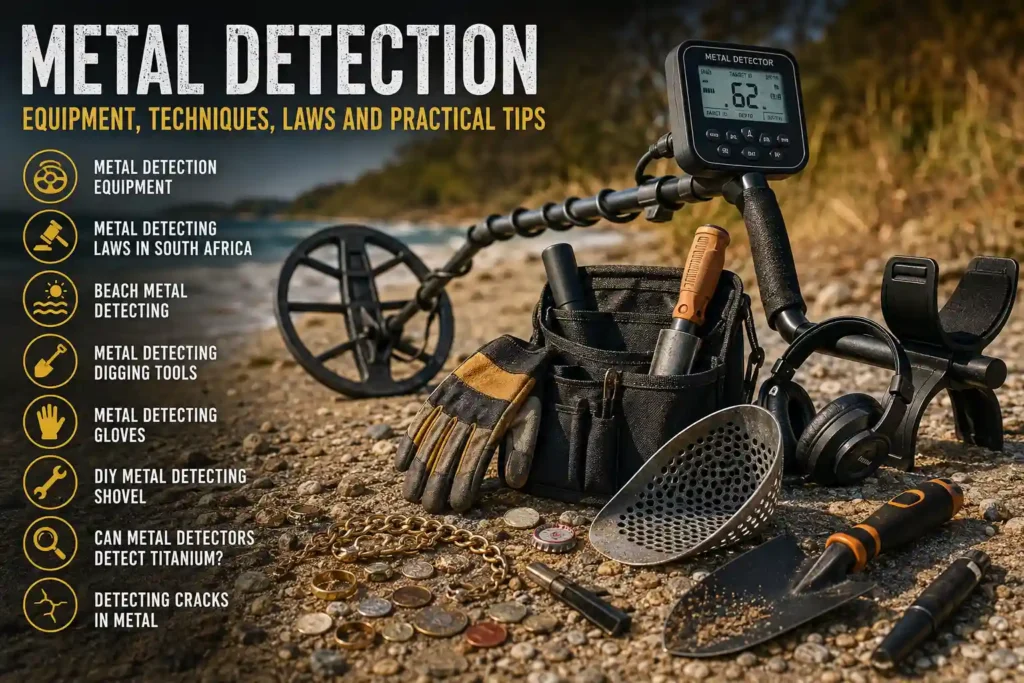
Metal detection is a practical hobby and field activity that combines technology, observation, and research. Modern metal detectors can identify metallic objects beneath the ground or across surfaces, making them useful for prospecting, historical searches, beach detecting, and general metal recovery.
Choosing suitable metal detecting equipment is only part of the process. Understanding how detectors respond to different metals, using the right digging tools, and knowing the rules that apply to your location are equally important.
What Is Metal Detection?
Metal detection uses electromagnetic technology to locate conductive or metallic objects.
A detector typically sends an electromagnetic signal through a search coil. When the signal interacts with a suitable metal target, the detector receives a response and converts it into information that the operator can interpret.
Different detectors are designed for different applications. Some are intended for general metal detecting while others are optimized for gold prospecting, relic hunting, coin detection, or beach environments.
Ground conditions also matter. Mineralized soil, saltwater, rocks, moisture, and electrical interference can all influence detector performance.
How Does a Metal Detector Work?
Most modern detectors use a search coil to transmit and receive electromagnetic signals.
When a metallic object enters the detector’s electromagnetic field, it can alter the returning signal. The detector’s electronics process this change and provide a response through sound, a display, vibration, or a combination of these features.
The response does not automatically identify the target with complete certainty. Target size, shape, composition, depth, soil conditions, and detector settings can all affect the signal.
Learning how to interpret different responses is therefore an important part of becoming a more capable detector operator.
Can Metal Detectors Detect Titanium?
A common question is: can metal detectors detect titanium?
Yes, titanium can be detected by metal detectors. However, its response can differ from metals such as iron, copper, silver, or aluminum.
Titanium has relatively low electrical conductivity compared with many commonly detected metals. As a result, the strength and characteristics of its signal can depend on the detector’s technology, operating frequency, target size, shape, and depth.
A titanium object may produce a weaker or different response than a similarly sized object made from a more conductive metal.
This is why detector performance should not be judged solely by whether a particular metal is detectable. The detector’s overall technology and the conditions in which it is being used also matter.
Metal Detection Equipment You Need
Having appropriate metal detecting equipment makes field work easier and more organized.
A basic setup may include:
- Metal detector
- Search coil
- Headphones
- Digging tool
- Hand scoop
- Pinpointer
- Gloves
- Finds pouch
- Batteries or charging equipment
- Protective equipment where appropriate
The equipment you need depends on the type of detecting you plan to do.
A beach detectorist may need different accessories from someone searching dry ground or mineralized terrain.
Metal Detecting Digging Tools
Finding a target is only part of the process. Recovering it carefully is equally important.
Common metal detecting digging tools include hand trowels, digging knives, sand scoops, compact shovels, and specialized recovery tools.
A suitable digging tool should match the ground you are working in.
Soft soil may require only a small hand tool, while compact or rocky ground may require a stronger digging implement.
The goal should always be to recover targets while causing as little unnecessary disturbance to the surrounding area as possible.
DIY Metal Detecting Shovel
Some detectorists consider making a DIY metal detecting shovel using commonly available materials.
While a homemade shovel can be useful for experimentation, the design should be strong enough for the ground conditions and comfortable to use.
It is also important to consider whether the materials used in a homemade tool could interfere with your detector when the shovel is close to the search coil.
For regular detecting, a purpose-designed digging tool can provide more predictable handling and durability.
Metal Detecting Gloves
Metal detecting gloves can help protect your hands while recovering targets.
Digging can expose the operator to sharp metal fragments, rocks, broken glass, thorns, and other objects that may be hidden beneath the surface.
Choose gloves that provide a suitable balance between protection, flexibility, and grip. Gloves should not make it difficult to handle small targets or operate equipment.
Beach Metal Detecting
Beach metal detecting presents different conditions from detecting on dry land.
Wet sand and saltwater contain conductive minerals that can interfere with some detectors. Moving between dry sand, wet sand, and the waterline may therefore require different detector settings depending on the equipment being used.
Beach environments can also contain a wide range of targets, including coins, jewelry, bottle caps, aluminum, and iron objects.
A detector designed or configured for beach conditions can make operation more manageable in these environments.
Before detecting on a beach, always check whether detecting is permitted in that specific location.
Detecting Cracks in Metal
Metal detectors are primarily designed to locate metallic targets rather than perform detailed structural inspections.
Detecting cracks in metal is a different technical application. Detecting a crack within a metal component generally requires specialized non-destructive testing methods rather than a conventional hobby metal detector.
Depending on the material and application, techniques such as ultrasonic testing, magnetic particle inspection, dye penetrant testing, or eddy-current testing may be used by qualified professionals.
A standard metal detector should therefore not be treated as a reliable tool for determining whether an important structural component contains an internal crack.
Metal Detecting Laws in South Africa
Anyone researching metal detecting laws in South Africa should check the current rules that apply to the specific location before detecting.
Requirements can differ depending on the type of land, archaeological significance, protected areas, beaches, heritage sites, and ownership of the property.
Some locations may require permission from a landowner or relevant authority. Additional restrictions may apply to archaeological or historically significant material.
Rules can also change, so information found in older detecting discussions may no longer reflect current requirements.
Before searching, determine who controls the land and whether permission or authorization is required. Respect protected sites and do not remove archaeological material where doing so is prohibited.
Responsible Metal Detecting
Responsible detecting involves more than finding targets.
Always obtain permission where required, respect private property, avoid protected locations, and recover targets carefully.
Fill holes after digging and leave the area in a condition that is as close as possible to how you found it.
If you discover an object that appears historically significant, research the applicable reporting and preservation requirements before removing or disposing of it.
Good detecting practice protects the environment, respects property, and helps preserve access to detecting areas for others.
Choosing Metal Detecting Equipment
The right equipment depends on your intended use.
For general detecting, consider detector sensitivity, target identification, search coil design, weight, battery life, and operating modes.
For gold prospecting, ground balance and performance in mineralized soil can become particularly important.
For beach detecting, consider how the detector handles conductive saltwater environments and whether it is designed for wet sand or shallow-water use.
Accessories should also match the environment. A compact digging tool may be suitable for parks or soft soil, while a stronger shovel may be more appropriate for difficult ground where digging is permitted.
Final Thoughts
Metal detection is easier to approach when the equipment, environment, and recovery techniques are considered together.
Understanding how detectors respond to different metals can help set realistic expectations. Questions such as whether a detector can detect titanium also demonstrate why target composition and detector technology matter.
From choosing appropriate metal detecting equipment to selecting digging tools and protective gloves, each part of the setup has a practical purpose.
Most importantly, responsible detecting starts before the detector is switched on. Check local requirements, obtain permission where necessary, respect protected areas, and use equipment appropriate for the environment.
