

Blog
Gold Detector Africa: A Guide to Choosing a Gold Detector in South Africa
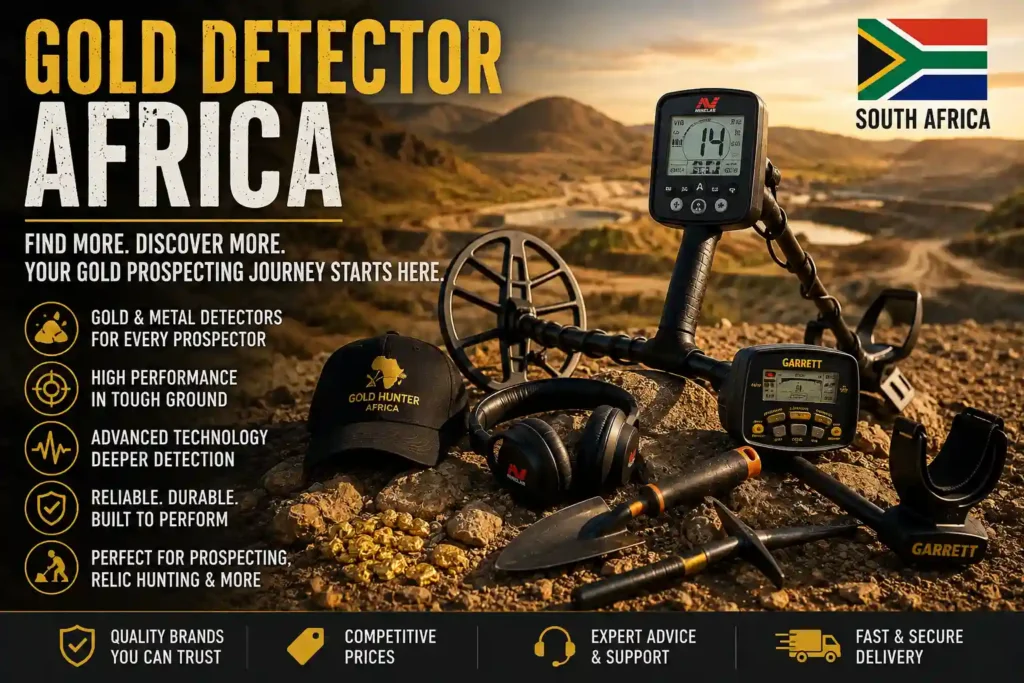
Finding the right gold detector Africa customers can rely on starts with understanding the different technologies available and how they perform in real detecting conditions.
South Africa has a long history of gold mining and prospecting, which has contributed to strong interest in modern gold detection equipment. Today, customers can choose from compact gold metal detectors, professional prospecting machines, and advanced systems designed for demanding ground conditions.
The right detector depends on where you plan to search, what type of target you are looking for, your experience level, and the features you actually need.
Choosing a Gold Detector in South Africa
A gold detector is not simply a device that identifies gold. It is an electronic detection system designed to respond to metallic targets while dealing with the surrounding ground.
Soil mineralization can have a significant effect on detector performance. This is particularly important in areas where naturally occurring minerals produce strong ground responses.
When comparing a gold detector machine for sale, consider more than the advertised detection depth. Operating technology, search coil design, ground balance, sensitivity, weight, battery life, and target response can all influence the detecting experience.
Gold and Metal Detectors: What Is the Difference?
The terms gold and metal detector and gold detector are sometimes used interchangeably, but they can refer to different types of equipment.
A general metal detector may be designed to locate a broad range of metallic targets such as coins, jewelry, relics, and other objects.
A specialized gold detector may be designed with features intended for natural gold prospecting. These machines can place greater emphasis on sensitivity to small targets and handling mineralized ground.
The most suitable option depends on your intended application.
Types of Gold Metal Detectors
Gold metal detectors are available with different operating technologies.
VLF Gold Detectors
Very Low Frequency or VLF detectors use a continuous electromagnetic signal to detect metallic targets.
Many VLF machines offer features such as ground balance, sensitivity adjustment, discrimination, and target identification.
Some models are designed specifically for gold prospecting, while others are intended for general metal detection.
VLF technology can be useful for detecting smaller targets, although highly mineralized ground can affect the detector’s response.
Pulse Induction Gold Detectors
Pulse Induction or PI detectors operate by transmitting short electrical pulses into the ground and measuring the returning response.
PI technology is widely associated with gold prospecting because it can be useful in mineralized environments.
Features differ considerably between models, so specifications should be examined carefully before choosing a machine.
Multi-Frequency Detectors
Some modern detectors operate across multiple frequencies.
Multi-frequency technology can provide flexibility when detecting different types of metallic targets and working across changing ground conditions.
However, the term “multi-frequency” alone does not determine the overall performance of a detector. The search coil, electronics, software, ground balance system, and available operating modes should also be considered.
What Is the Cheapest Gold Detector in South Africa?
Searches for the cheapest gold detector in South Africa are common, particularly among people who are new to prospecting.
However, the lowest purchase price does not necessarily represent the most suitable equipment for a particular application.
Entry-level detectors can provide a practical way to learn the basics of metal detecting. More specialized gold detectors may cost considerably more because they include different technologies, stronger ground-handling capabilities, specialized coils, or additional controls.
Before choosing a low-cost detector, consider whether it is actually designed for the environment where you intend to use it.
A lower-priced general metal detector may not provide the same functionality as equipment specifically designed for natural gold prospecting.
Gold Detector Machine for Sale: What Should You Check?
When comparing a gold detector machine for sale, look carefully at the specifications rather than relying only on marketing descriptions.
Important factors include:
- Detection technology
- Operating frequency
- Ground balance
- Search coil type and size
- Sensitivity adjustment
- Target identification
- Operating modes
- Battery life
- Detector weight
- Warranty
- Available accessories
- Manufacturer specifications
The right combination depends on the intended application.
GPZ 7000 Gold Detector Price
The GPZ 7000 gold detector price can vary depending on the seller, location, condition, included accessories, taxes, shipping, and whether the machine is new or used.
The GPZ 7000 is a specialized gold prospecting detector from Minelab and uses the manufacturer’s ZVT technology.
When comparing its price with other gold detectors, it is useful to consider the complete package rather than looking at the machine price alone.
Check what is included with the detector, the condition of the equipment, warranty coverage, search coils, accessories, and delivery arrangements.
Gold Hunter Detector
The term gold hunter detector can refer broadly to detectors marketed for people searching for natural gold.
When comparing a gold hunter detector with other machines, focus on its actual specifications rather than the name alone.
Look at the detector’s operating technology, ground balance capabilities, search coil, sensitivity, controls, battery system, and intended application.
A product name can describe the intended market, but the technical specifications provide more useful information when comparing equipment.
What Is the Best Metal Detector for Gold?
People often search for the best metal detector for gold, but there is no single machine that is ideal for every person and every environment.
A detector suitable for highly mineralized ground may have different characteristics from a machine intended for general detecting.
Your choice should depend on:
Ground conditions: Mineralized soil can affect detector operation.
Target size: Small natural gold can require different sensitivity characteristics from larger metallic objects.
Experience: Beginners may prefer simpler controls while experienced operators may want more adjustment options.
Search environment: Dry ground, rocky terrain, beaches, and other environments can place different demands on equipment.
Budget: The cost of a detector should be considered alongside its specifications, warranty, accessories, and intended application.
Cheap Gold Detectors: Are They Suitable?
A cheap gold detector can be attractive to someone entering the hobby, but price should be considered alongside capability.
Some affordable detectors are designed primarily for general metal detecting rather than natural gold prospecting.
Before purchasing, check whether the machine is designed for the targets and soil conditions you expect to encounter.
A detector with appropriate ground balance, sensitivity, and search coil characteristics may be more useful than a cheaper machine that is not designed for your intended application.
Garrett Gold Detector Options
A Garrett gold detector may refer to Garrett machines designed for gold prospecting or detectors capable of detecting a broad range of metallic targets.
When comparing Garrett equipment with other manufacturers, consider the specific model rather than the brand name alone.
Different models can have substantially different operating technologies, search coils, controls, and intended applications.
The same principle applies to every detector manufacturer. Compare the individual machine’s specifications and intended use.
How Deep Can a Gold Detector Detect?
There is no universal detection depth for every gold detector.
Actual detection depth can depend on:
- Target size
- Target composition
- Target orientation
- Soil mineralization
- Search coil
- Detector technology
- Sensitivity settings
- Ground balance
- Operator technique
A large metallic target may produce a detectable response at a different depth from a small natural gold nugget.
For this reason, advertised depth figures should be treated as specifications under particular conditions rather than a guaranteed result in every location.
Gold Detection in South Africa
South Africa contains a variety of geological environments, and ground conditions can vary significantly between regions.
This makes detector selection particularly important for anyone interested in gold prospecting.
Before detecting on private property, obtain the necessary permission from the landowner. You should also check the current rules that apply to public land, protected areas, heritage locations, beaches, and other restricted sites.
Laws and access requirements can change, so always confirm the current requirements for the specific location where you intend to detect.
How to Choose Your Gold Detector
Start by identifying your intended use.
If you are new to detecting, consider a machine with straightforward controls and manageable weight.
If your primary interest is natural gold, pay close attention to the detector’s sensitivity, ground balance system, search coil, and ability to operate in mineralized soil.
If you want to detect different types of targets, a general-purpose or multi-frequency machine may provide greater flexibility.
Most importantly, compare complete specifications rather than choosing a detector based on price or one advertised feature.
Final Thoughts
Choosing a gold detector Africa customers can use effectively requires an understanding of technology, terrain, target characteristics, and personal requirements.
Whether you are comparing a gold metal detector, researching the GPZ 7000 gold detector price, considering a Garrett gold detector, or looking for a more affordable entry-level machine, the same principle applies: match the equipment to the environment and intended use.
